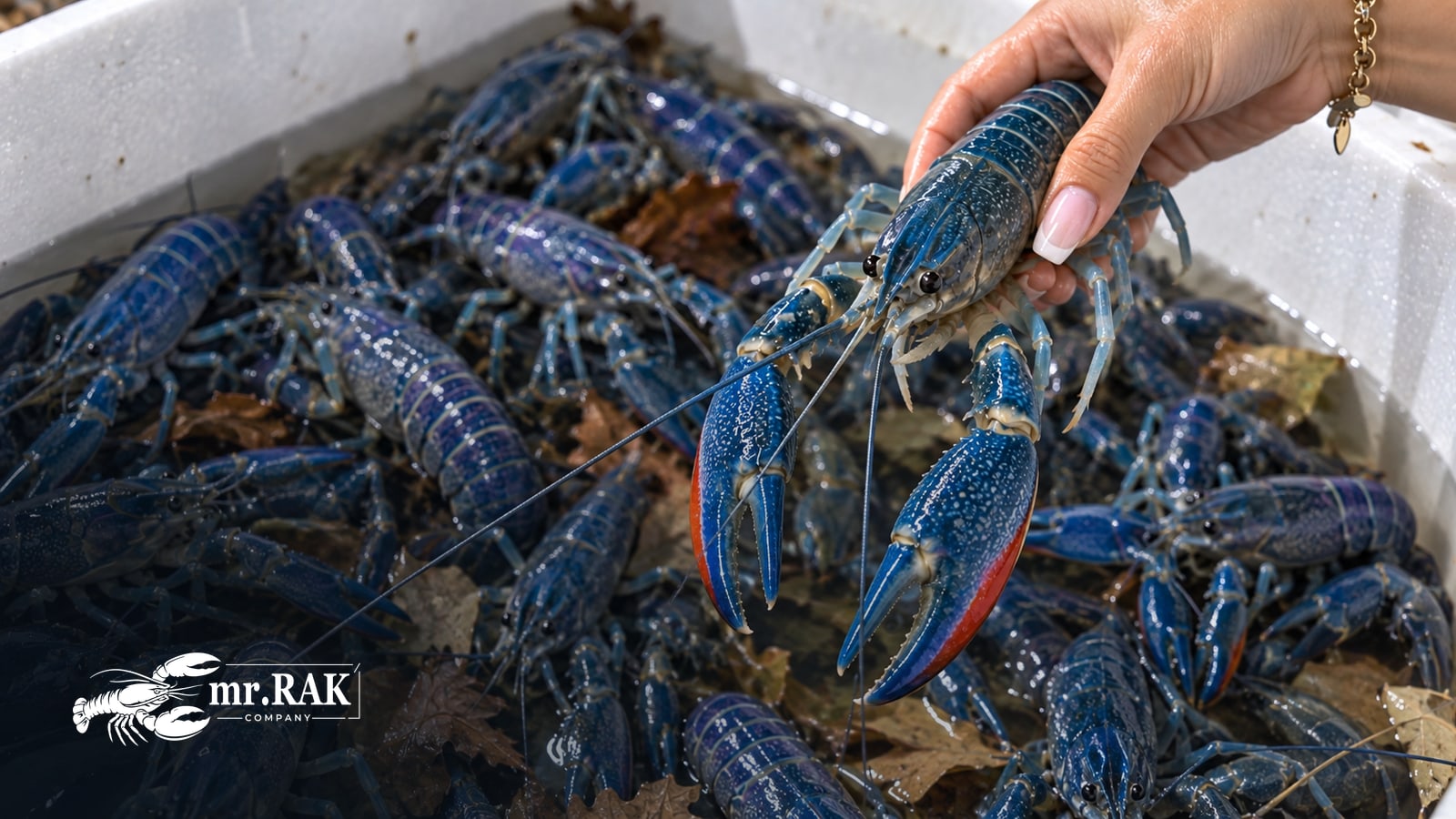
A warmth-loving freshwater decapod crayfish whose natural range is linked to northern Australia and New Guinea. The species is widely used in aquaculture thanks to its fast growth, large claws, high proportion of muscle tissue and the possibility of farming it in controlled systems.
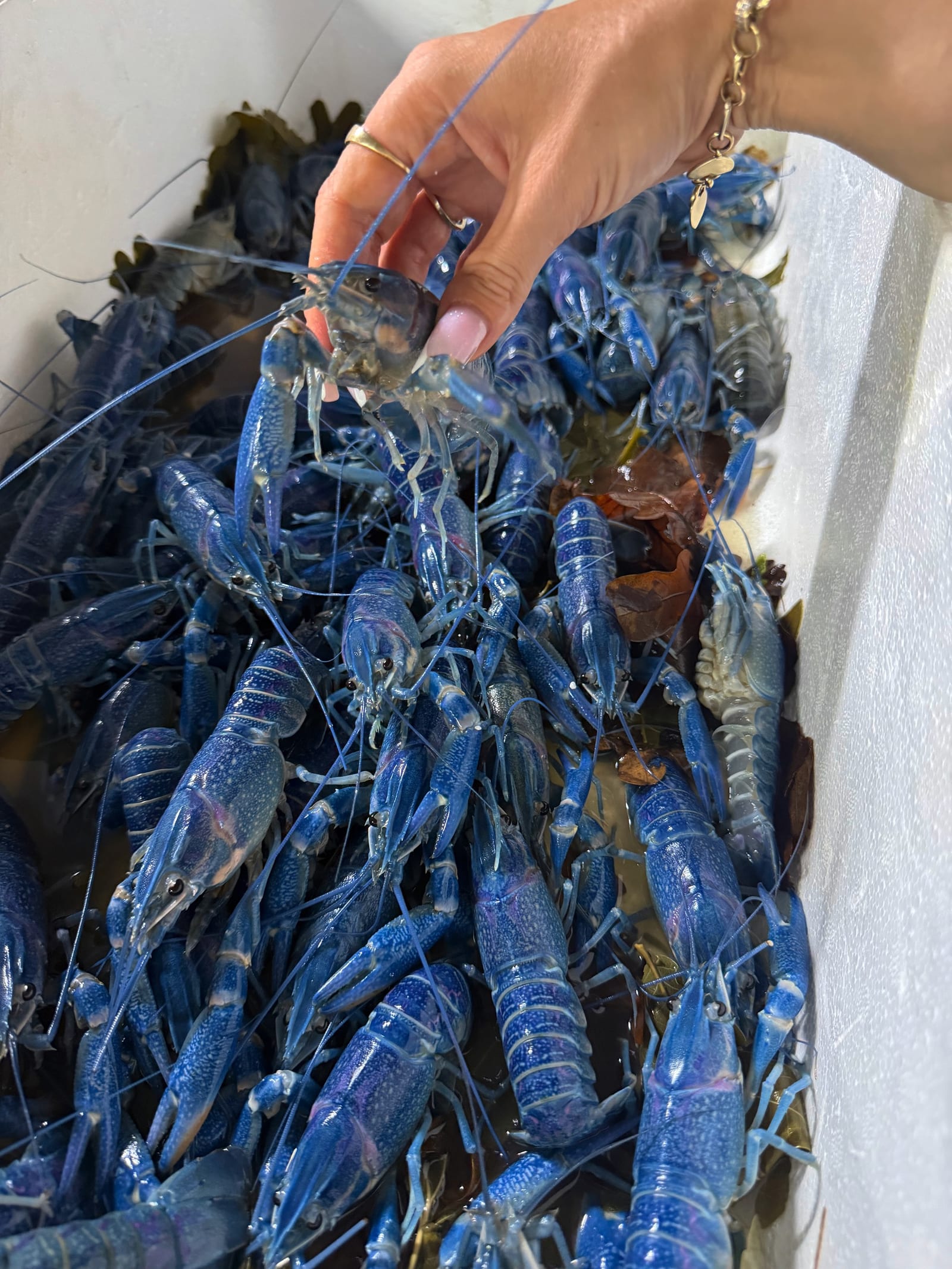
Moulting and growth
The crayfish does not grow gradually, but after moulting. The old shell is shed, and the new one stays soft for some time. This is when the animal is most vulnerable, so shelters and enough space are especially important. Moulting becomes less frequent with age.
Breathing
Gas exchange takes place through the gills located under the carapace. For intensive farming, stable aeration, water circulation and control of dissolved oxygen are important.
Claws
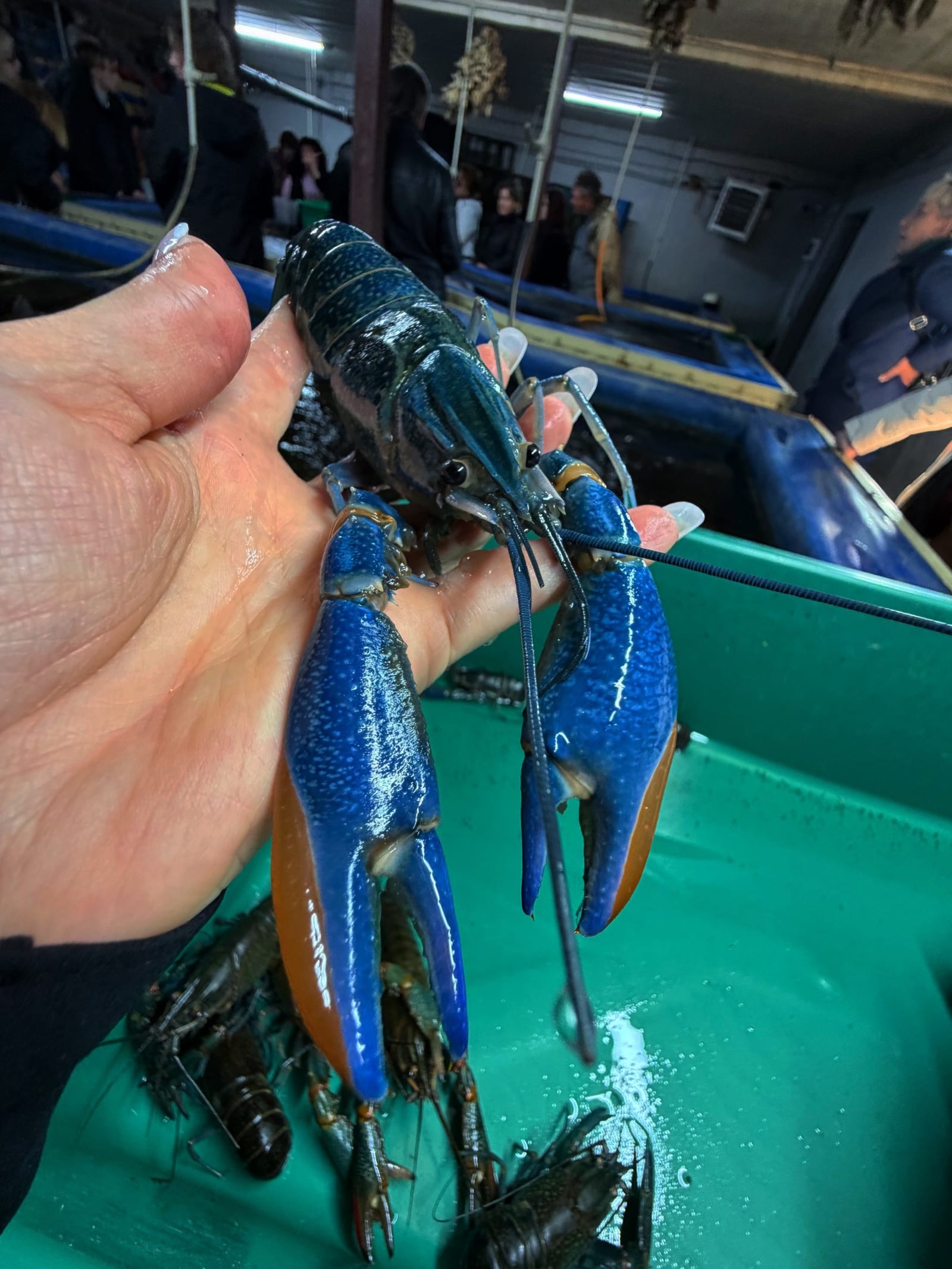
The large claws are used for defence, competition, holding food and interaction between individuals. A characteristic feature of adult males is a red area on the outer side of the claw — hence the name "redclaw".
Regeneration
After losing a limb, the crayfish can gradually regrow it over the following moults. At first the new limb is smaller, and it grows larger with subsequent moults.
Feeding
The species is omnivorous. In the wild it feeds on plant material, detritus, aquatic invertebrates and other available organic matter. On a farm the diet is designed to provide enough protein, energy, minerals and vitamins.
What this means for a farm
The Australian crayfish grows to market weight in about 6 months. Vulnerability during moulting is one of the reasons part of the stock dies: our calculations assume a survival rate of 70–80 %, and the harvest is already calculated with these losses taken into account. The blue-green colour of the shell is natural — it is not paint and not a disease.